

Why mangroves store so much carbon: Jordan Flagel on Marine Conservation Happy Hour
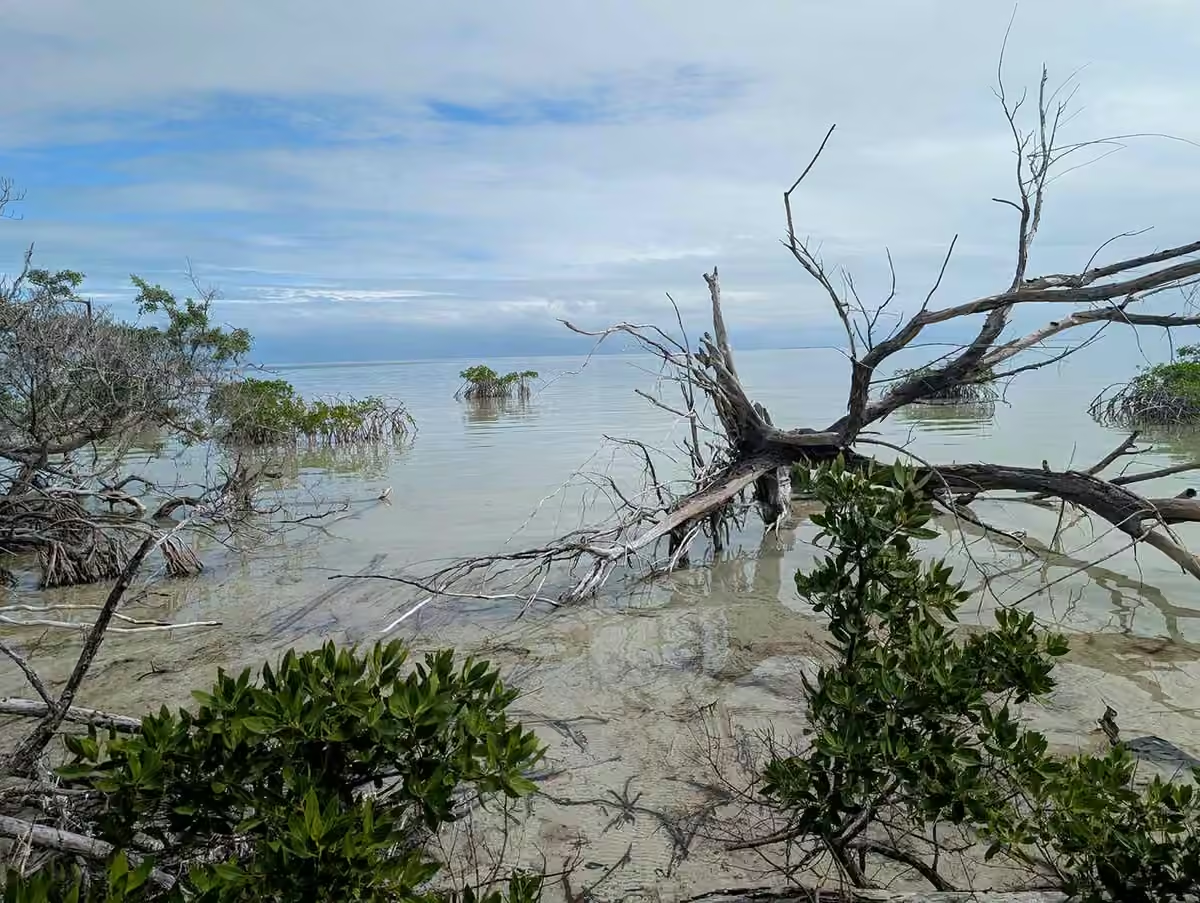
A week after talking giant clams, IMARCS Vice President and Lead Environmental Scientist Jordan Flagel returned to Marine Conservation Happy Hour with Dr Scarlett Smash and Dr Craken MacCraic. This time the topic was mangroves, the carbon they hold, and how Belize is working to keep them standing.
From rainforests to mangroves
Jordan started in tropical forest ecology in Guyana. He then moved to Belize with Ecology Project International, working across forests, reefs, and mangroves. That is where he began focusing on mangroves, which led to his research in the area.
The carbon is in the soil
Dr Smash raised the often quoted figure that mangroves sequester five times more carbon than tropical forests. Jordan called that number conservative. The reason is the soil. Mangroves deposit organic matter and store carbon deep underground. In Belize, his two meter measuring stick does not reach the bottom, and the soils can run from three to ten meters deep.
The deeper the carbon goes, the more it becomes geologically stored. Left undisturbed, it can stay there on geological timescales. The risk comes when the soil is dug up or exposed: oxidation releases that stored carbon. "That's why protecting mangroves is so crucial," Jordan said. A tropical forest, by contrast, is a system in flux, with most of its carbon above ground and constantly recycled.
Dwarf mangroves that grow down, not up
One of the most striking details: along the coast of Belize there are dwarf mangroves that look stunted and degraded. According to Jordan, they are hundreds of years old and have been "growing downwards instead of upwards." In a phosphorus-limited environment, their roots push deeper and deeper in search of nutrients, carrying carbon down with them. Soil tests in those areas have measured around 2,500 tons of carbon per hectare.
More than carbon
Mangroves are also fish nurseries and filters for runoff. Microplastics get trapped in their root systems before reaching the ocean, which pairs with the giant clam microplastics work from the previous episode. In Belize, the storm protection mangroves provide has been estimated at between $114 million and $135 million a year in avoided damage.
Mangroves and reefs also depend on each other. In Belize they sit about a kilometer apart on average. At Turneffe Atoll, Jordan has snorkeled from mangrove to reef without moving the boat. Healthy mangroves feed reefs through their fish nurseries and by clearing pollutants and turbidity. More on that link: how coral reefs, giant clams, and mangroves depend on one another.
Paying for protection
Why do mangroves get cleared? Mostly because they are in the way of white sand beaches. Putting a price on what they provide is hard. Jordan was told during his first master's degree not to try to quantify ecosystem services, and on private land a high conservation value does not stop development.
Belize's approach is one he rates as good as any he has seen. The government is working with carbon offset project developers on government-owned land, which can count toward Belize's nationally determined contributions under Article 6 of the Paris Agreement or bring in revenue while keeping the land protected. Belize also completed a debt-for-nature swap facilitated by The Nature Conservancy. Jordan also explained why permanence matters: a protected mangrove holds carbon on geological timescales, while forest carbon cycles far faster. More on nature-based carbon capture.
Why he is optimistic
Jordan described hitchhiking across the Sahara during grad school and reaching a low point at the piles of garbage he saw along the way. What changed his thinking was realizing that solutions do not have to be rolled out one place at a time. "Any good solution can be implemented all across the world all at once," he said. That is the idea behind IMARCS's coral recovery work: prove it, then let larger organizations use it everywhere, from the Great Barrier Reef to Indonesia.
Get out there
His closing advice was to visit mangroves and reefs in person if you can, and to share the IMARCS mission, which he said is worth as much as a donation. For those who do want to give, IMARCS is a US 501(c)(3) nonprofit, and you can support the work here.
Listen and follow
The full episode is on the Marine Conservation Happy Hour website and Spotify. Catch the first episode: Giant clams, carbon, microplastics, and coral recovery. Jordan also joined Rising Tide: The Ocean Podcast to talk giant clams and bleached coral: Can giant clams help bleached corals recover?