IMARCS Foundation

Partner with IMARCS

Fund marine research already under way in Japan, Micronesia, Spain and Belize, with partners including the University of Barcelona and the World Ocean Council. US 501(c)(3) nonprofit, EIN 39-2591649.

Donations may be tax deductible · Secure checkout

Proud memberWorld Ocean CouncilGlobal Fund for Coral ReefsResearch partnerUniversitat de BarcelonaField partnerSeal of the Government of the Federated States of MicronesiaMicronesia Management and Marketing Enterprises

Make a gift

Your gift funds the research on this page: the tanks, the field work, the lab analysis and the people who run them. Give once or monthly, and direct it to a program if you like.

  • Any amount, one time or monthly
  • Direct your gift to a specific program
  • Email receipt for every gift
  • For larger or multi-year commitments, talk with our President

Secure payment by Stripe. Card, Apple Pay, Google Pay or Link. Donations may be tax deductible. EIN 39-2591649.

Our partners

The institutions, hatcheries and organizations we work with.

Where we work

Japan

Our facility

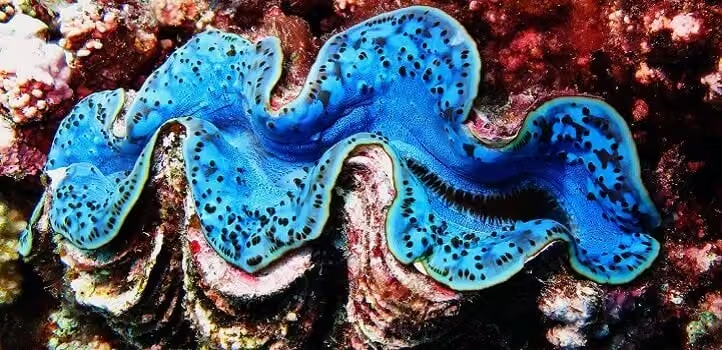
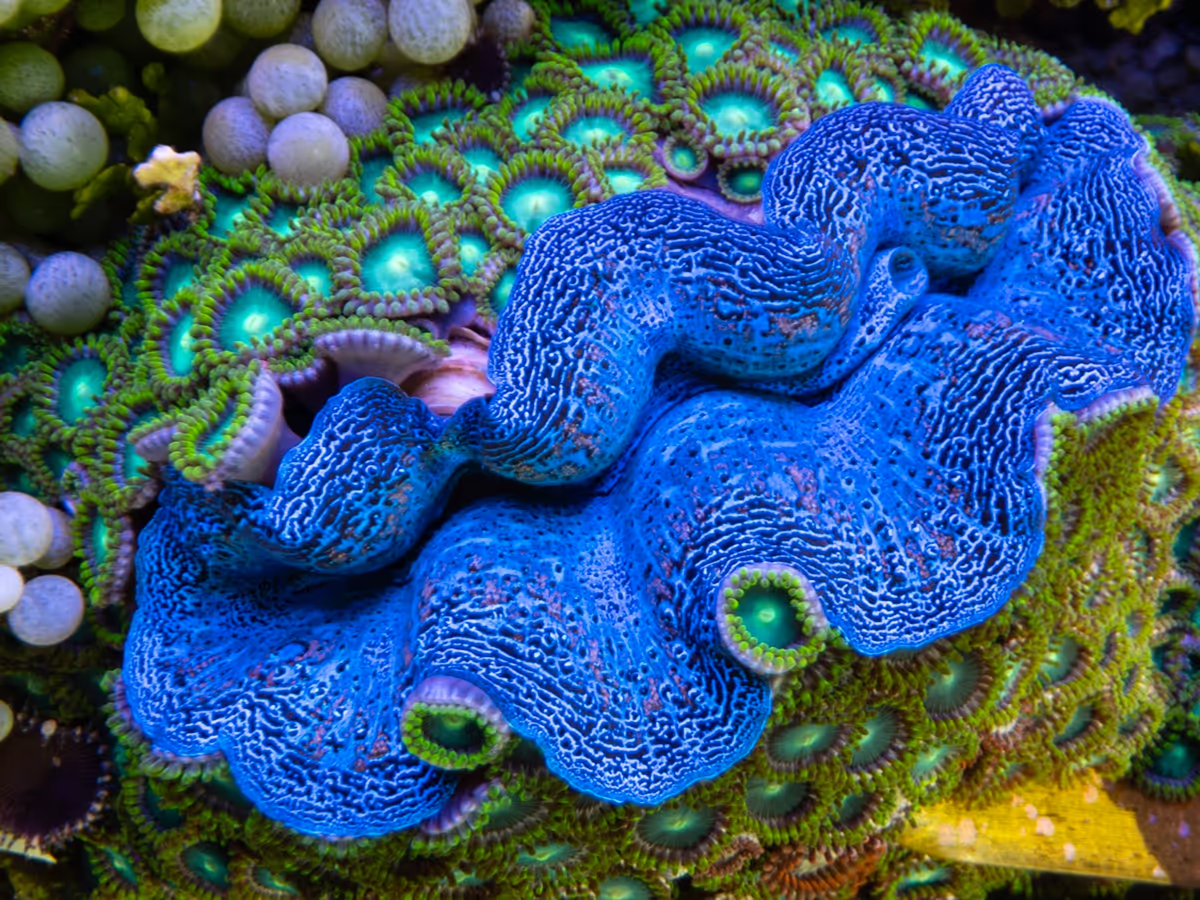
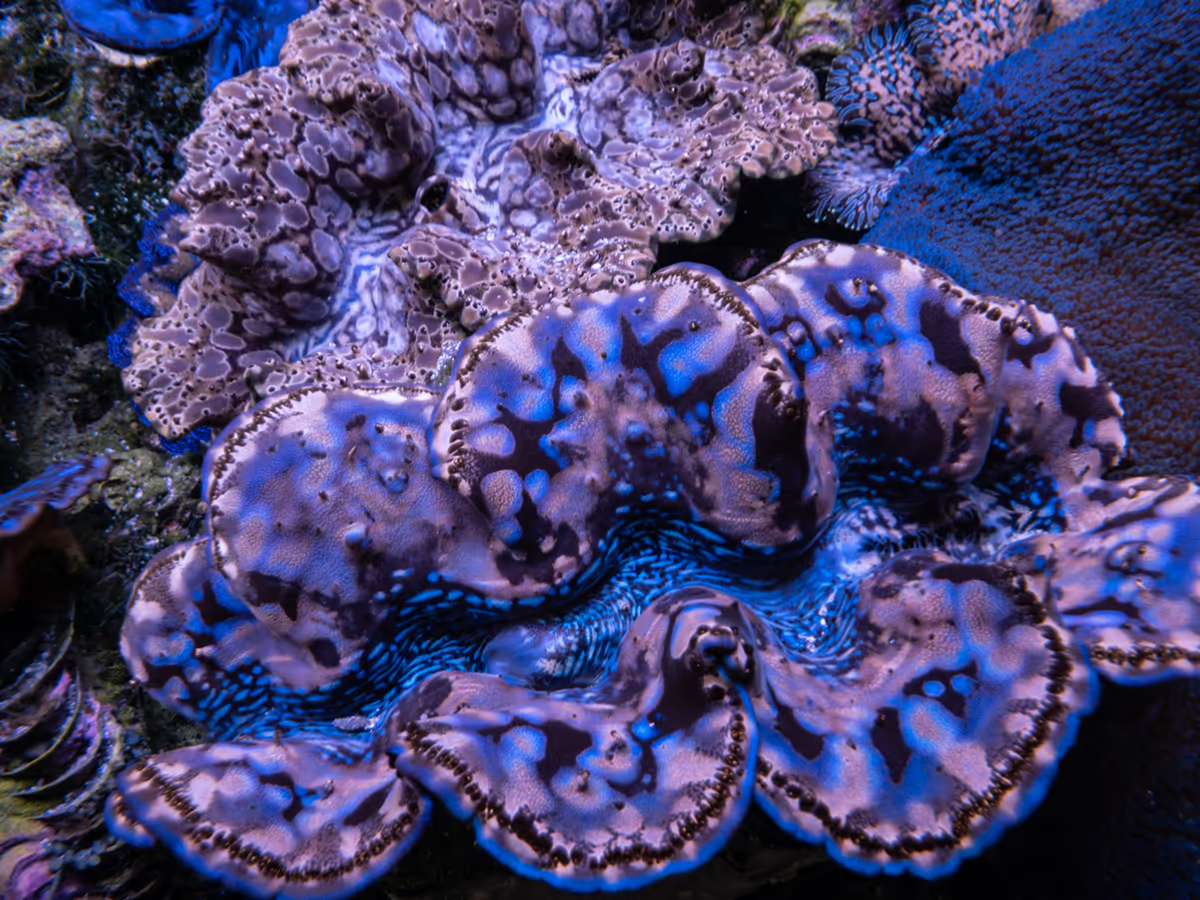
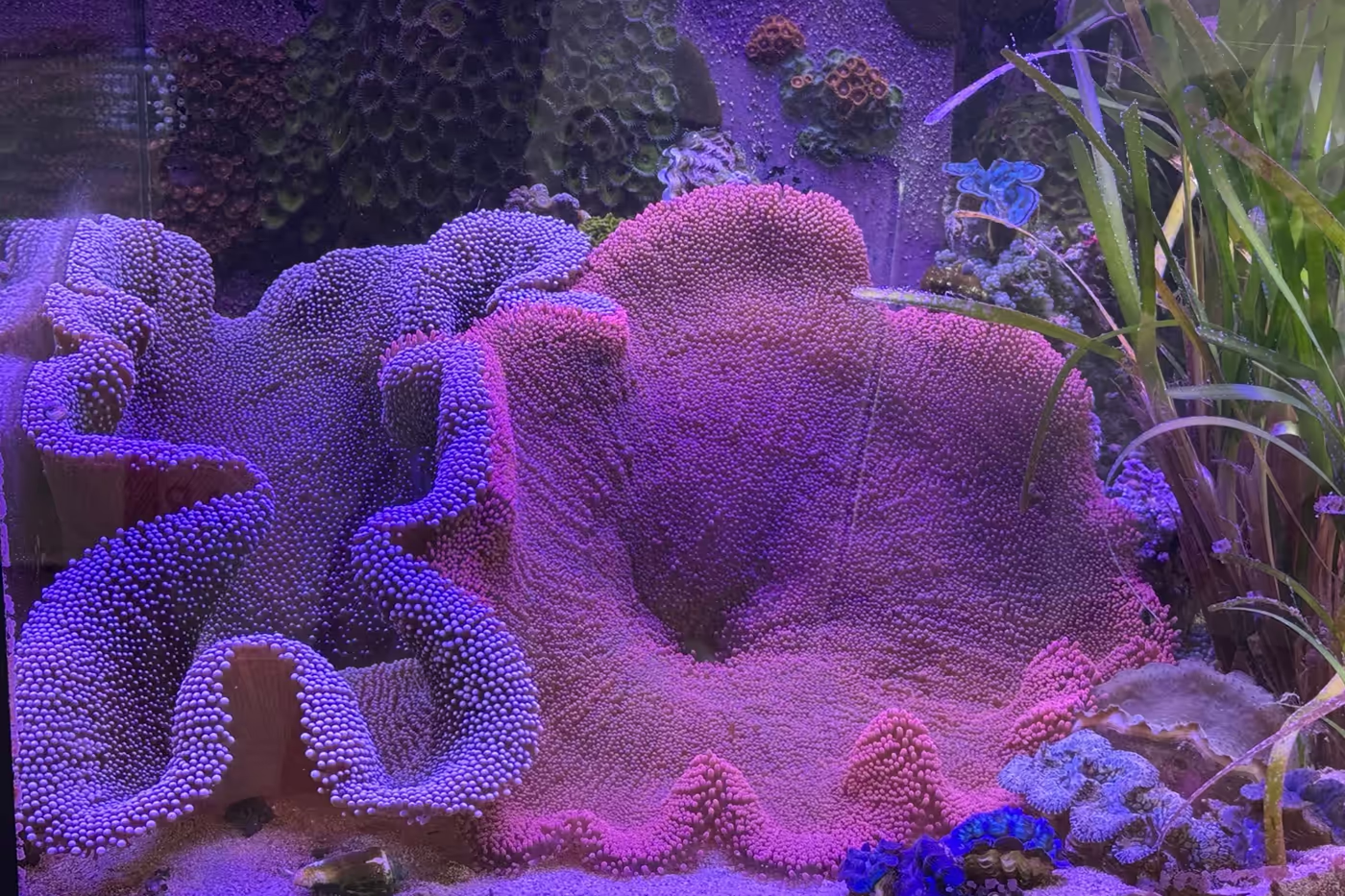
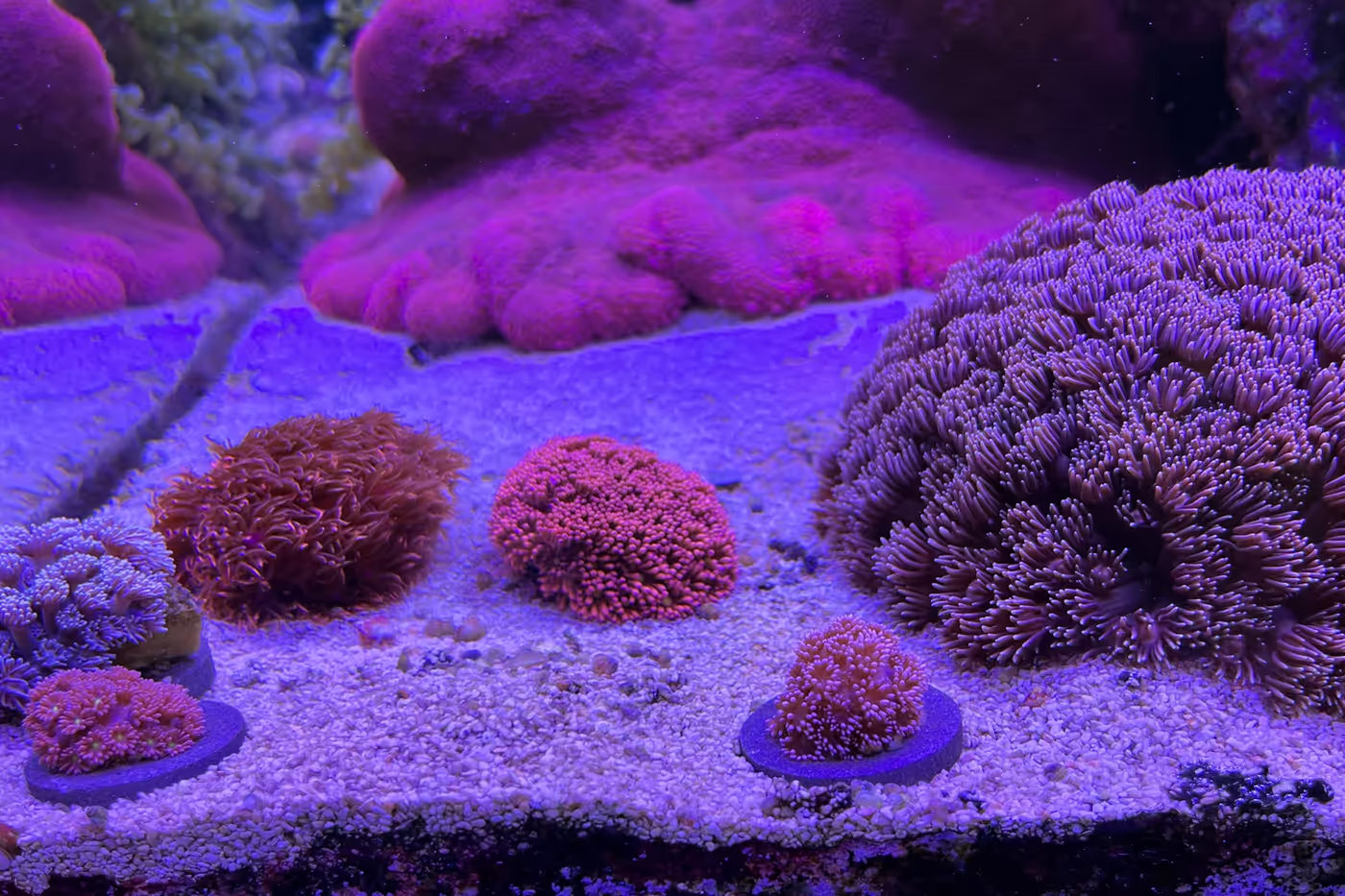
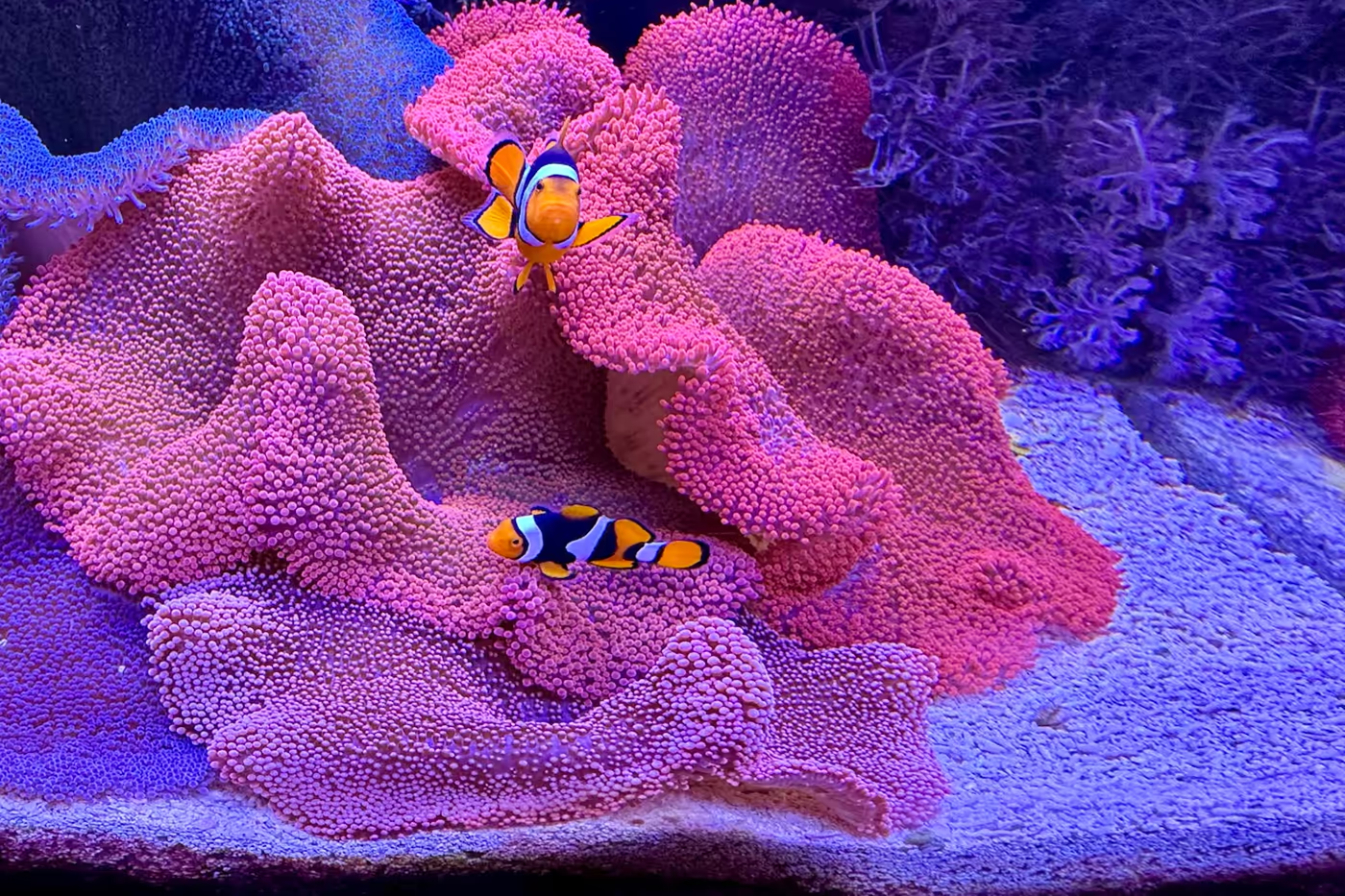
Home to our giant clams, clownfish, carpet anemones and flowerpot coral. We grow out giant clams to reseed reefs, test them as natural microplastic filters, and test whether raising seawater pH can turn them into true carbon sinks. We also run an ongoing clownfish genomic study, rear Goniopora, and have spawned the carpet anemone Stichodactyla haddoni in captivity.

Micronesia

Kosrae, Federated States of Micronesia

Our core field partner is the FSM National Aquaculture Center giant clam hatchery, run through Micronesia Management and Marketing Enterprises. Many of the clams in our Japan facility came from Kosrae, where we collected samples for our clam-to-coral symbiont experiment. We also work with clam farmers in Micronesia.

Spain

University of Barcelona

Our academic and laboratory partner. Researchers from the university advise IMARCS and supervise our genomic work, and the lab processes and analyzes our samples, including the symbiont work on giant clams and corals.

Belize

Mangroves

We are evaluating ongoing mangrove conservation activities in Belize, with specific attention to their carbon sequestration potential and biodiversity impacts.

Philippines

Semirara Island, planned

Pilot research mapped out on Semirara Mining and Power Corporation's giant clam seeding program: counts and surveys of seeded clams, and study of the clams as natural filters. Not yet under way.


Research highlights

Giant clams are Critically Endangered. These are the questions we are working on. See all current research.

Can giant clams help bleached corals recover?

Using samples from Micronesia and our University of Barcelona lab, we are testing whether zooxanthellae sourced from giant clams can speed the recovery of bleached corals and improve their thermal tolerance.

Turning giant clams into carbon sinks

Giant clam shell formation is roughly carbon neutral. We are testing whether raising seawater pH to reef-flat levels (8.5 or higher) tips that balance and turns clams into true carbon sinks.

Giant clams as microplastic filters

Giant clams filter the water around them. We are exploring them as natural filters for microplastics, and growing them out in mariculture tanks to reseed reefs.

The first captive-reared carpet anemones

Nearly every S. haddoni in the aquarium trade is collected from the wild. We have spawned it in captivity and are working on settling and rearing the larvae to juveniles, which to our knowledge has not been documented.

Rearing flowerpot coral

One species alone, Goniopora columna, made up about 7.2 million pieces of the coral trade between 2010 and 2020 under CITES records. We rear Goniopora in Japan for conservation and potential medical research.

A clownfish genomic study

An ongoing genomic study of our breeding pairs and their offspring. Our pairs also anchor school visits and our classroom curriculum.

Ways to partner

Sponsor a research program

Fund one of the programs above, from giant clam carbon research to captive breeding. Choose a program in the form, or talk with us about a larger commitment.

Corporate team adoptions

Adopt a giant clam, clownfish pair, carpet anemone or flowerpot coral for your office, with monthly updates your team can follow. See the reef residents.

Donor-advised funds

Recommend a grant to the IMARCS Foundation, EIN 39-2591649, through your fund's grant portal.

Employer matching

Many employers match charitable gifts. Ask your HR or giving team to match your gift to the IMARCS Foundation.

What partners receive

  • Regular reporting on the work you fund
  • Recognition on our website and partner materials
  • Visits to our facility in Japan
  • Naming opportunities
  • Mentions in our newsletter, if you would like them

Talk with us

For sponsorships, restricted gifts, multi-year commitments or visits, email our President.

[email protected]

Read our funder brief

The team behind the research

Michael Maddox

Michael Maddox, B.Sc.

President and Head of Life Support

Runs the life support systems that keep every reef resident in our tanks alive.

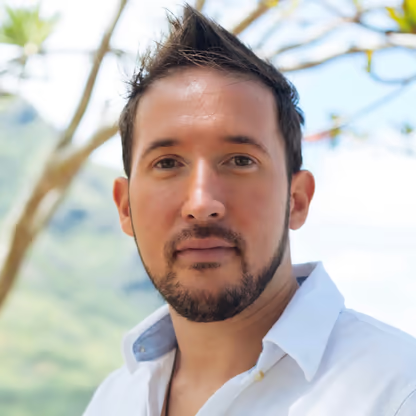
Jordan Flagel

Jordan Flagel, B.A., M.S., M.Sc.

Vice President and Lead Researcher

Over a decade working in reefs, mangroves and tropical forests for organizations including UN Green Corps.

Gui Paphorn

Gui Paphorn, B.A.

Treasurer and Head of Indigenous Outreach

A member of the Karen people who fled persecution in Myanmar, Gui leads our work with indigenous communities.

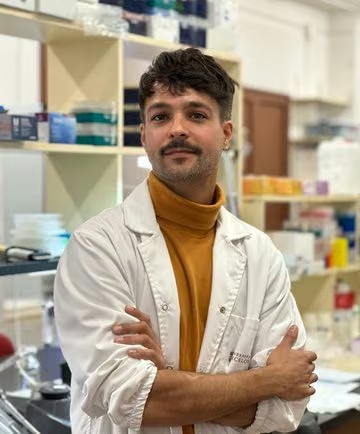
Vanessa Arranz

Vanessa Arranz, Ph.D.

Research Advisor

A marine molecular ecologist and Marie Skłodowska-Curie Fellow at the University of Barcelona.

Juan Moles

Juan Moles, Ph.D.

Research Advisor

A mollusc specialist who has helped describe dozens of new species and has been a postdoc at Harvard and taught at the University of Barcelona.

Questions

Is my gift tax deductible?

The IMARCS Foundation is a US 501(c)(3) nonprofit, EIN 39-2591649. Donations may be tax deductible. You receive an email receipt for every gift.

Can I direct my gift to a specific program?

Yes. Choose a program in the form above, or email us to discuss a restricted or multi-year gift.

Can I give monthly?

Yes. Choose Monthly in the form. You can change or cancel a monthly gift anytime.

Can I give through a donor-advised fund?

Yes. Recommend a grant to the IMARCS Foundation, EIN 39-2591649, through your fund's portal.

Will my employer match my gift?

Many do. Ask your HR or giving team; we are happy to provide anything they need.

Can I visit the facility?

Partners can arrange a visit to our facility in Japan. Email us to plan one.

Who do I talk to about a partnership?

Email our President at [email protected].

Help us keep this research going

Every gift goes to work in the tanks, the field and the lab.