IMARCS Foundation

A brief for funders

Pioneering novel research in reef restoration and coastal conservation.

Research under way in Japan, Micronesia, Spain, and Belize, with research leadership in Canada. What we study, who we work with, and how your support is put to work.

September 2026

The organization

Legal name
International Marine Science and Carbon Sequestration Organization
Operating name
The IMARCS Foundation
Status
US 501(c)(3) nonprofit, effective 2025
EIN
39-2591649
Legal address
13241 Roy Harris Loop, Conroe, TX 77306
Membership
Nonprofit partner member of the World Ocean Council; member of the Global Fund for Coral Reefs
Where we work
Japan, Micronesia, Spain, Belize, and Canada; a pilot in the Philippines is planned
Contact
[email protected] | imarcs.org

Mission

To advance marine conservation, reef resilience, and coastal restoration through hands-on research focused on giant clams, corals, mangroves, and nature-based solutions to remove microplastics and store excess emissions, with measurable results and lasting benefits for local communities.

Vision

A future where marine restoration is practical, measurable, and scalable, with reef organisms, coastal ecosystems, and education programs working together to restore marine environments, positively impact human health, and potentially help adapt to climate change.

Our approach

We integrate marine ecology, molecular genetics, and biogeochemistry, drawing on the work of leading scientists and collaborators across the globe. Our research programs are built to answer open questions: whether bleached corals can be helped to recover, how degraded reefs can be restocked, and whether giant clams and mangroves can serve as nature-based carbon sinks.

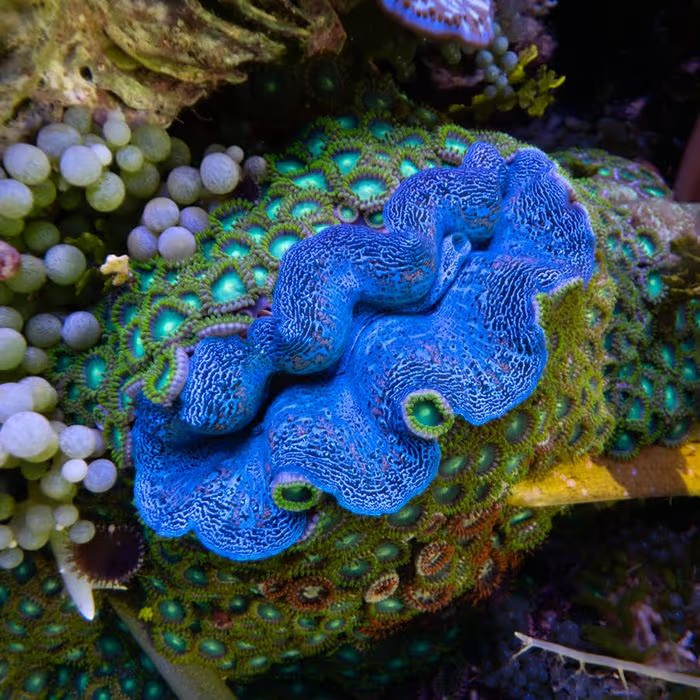
A giant clam at the IMARCS facility

Stewardship, not passive preservation

We practice stewardship, not pure preservation: wise use, not passive protection. People are part of the natural world, not separate from it, and ecosystems intended to be protected in isolation are still shaped by everything happening around them.

When a species is farmed and used sustainably, it gains an economic reason to exist, funding to support its recovery, and reduced pressure on wild populations. Use and protection reinforce each other instead of competing.

Food security starts with native species

Giant clams have fed and supplied Indo-Pacific island communities for thousands of years. Overharvesting emptied many reefs, and the largest species is now gone from parts of its historic range. Hatchery-raised native stock, grown locally and returned to local reefs, changes that.

Current research

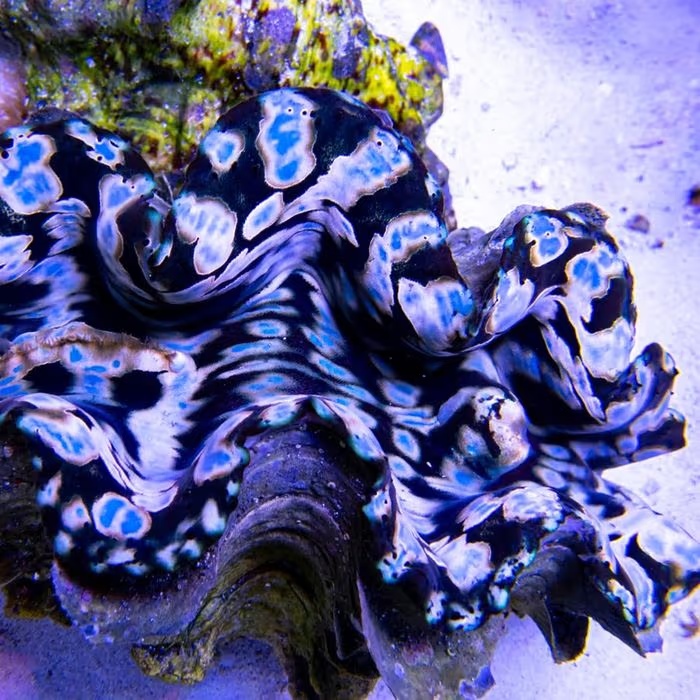
A giant clam at the IMARCS facility

Micronesia and Spain

Coral bleaching restoration

Coral bleaching, caused by the loss of photosynthetic zooxanthellae under thermal stress, has escalated in frequency and severity over the last four decades.

We're testing samples collected in Micronesia, using our University of Barcelona lab, to see whether zooxanthellae sourced from giant clams can accelerate the recovery of bleached corals. Our goal is to determine whether clam-derived zooxanthellae can improve the thermal tolerance of corals and potentially reverse coral bleaching.

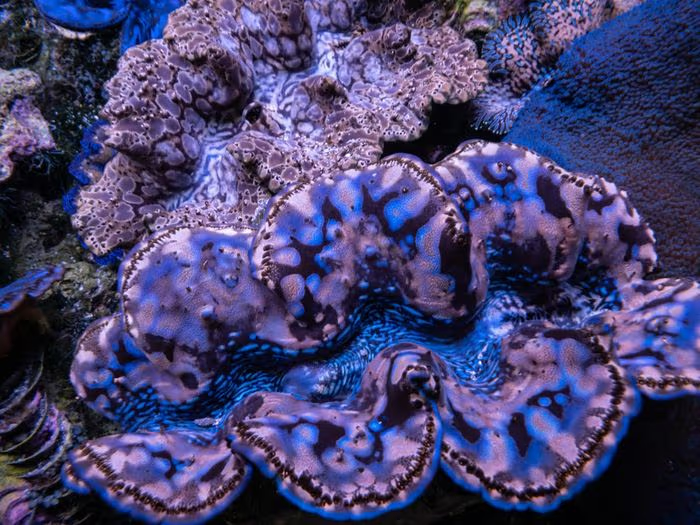
Giant clams at the IMARCS facility

Japan

Giant clams for reefs: microplastic filtration, reef reseeding, and carbon sequestration

Under natural conditions, giant clam shell formation is roughly carbon neutral, because CO₂ released during calcification offsets carbon uptake. We're testing whether raising seawater pH to levels typical of reef flats (8.5 or higher) can tip this balance and turn clams into true carbon sinks.

We're also exploring giant clams as natural filters for microplastics, and growing clams out in our mariculture tanks to reseed them onto reefs.

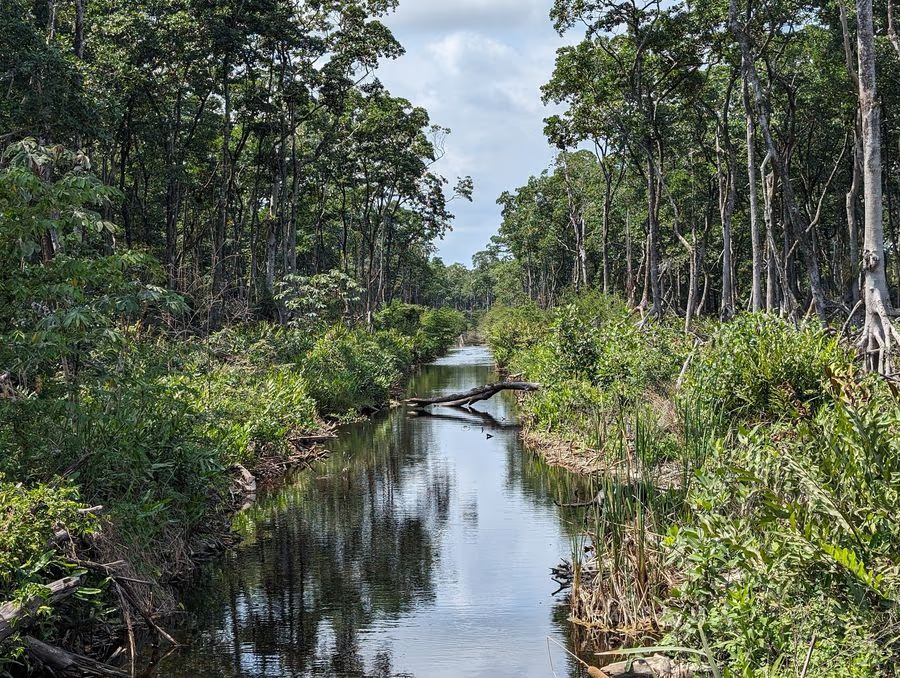
A mangrove channel in Belize

Belize

Mangrove conservation

Mangroves sequester at least five times more carbon than tropical forests. They are also hotspots for biodiversity and key enablers of coral reef health, with many reef species using mangrove root systems as nurseries.

We're evaluating ongoing mangrove conservation activities in Belize, with specific attention to their carbon sequestration potential and biodiversity impacts.

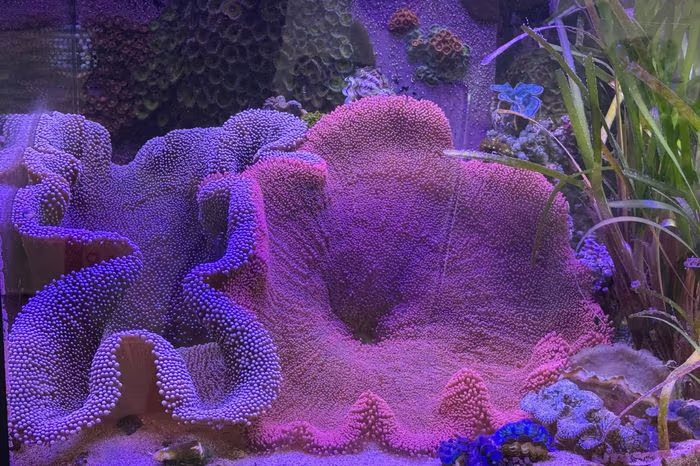
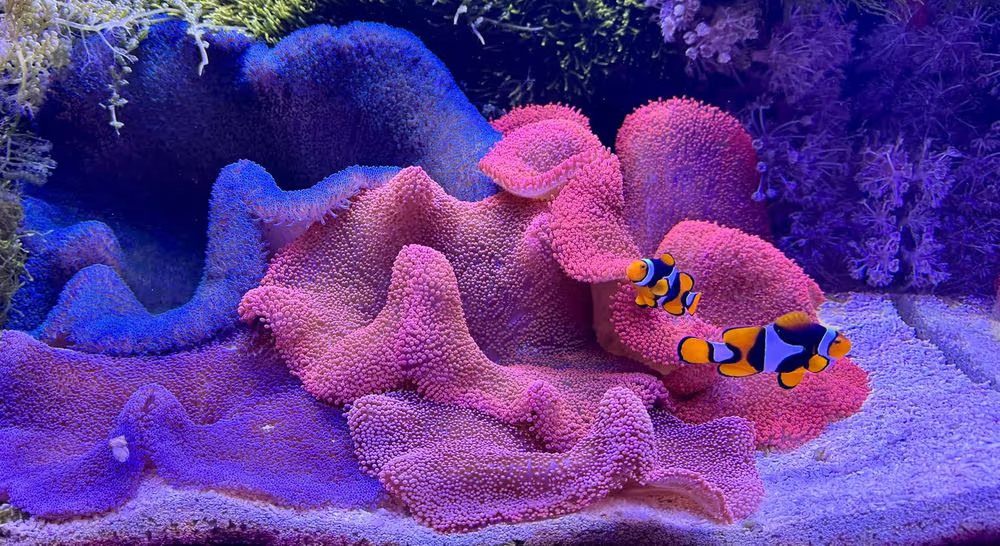
A carpet anemone at the IMARCS facility

Japan

Captive breeding of the carpet anemone Stichodactyla haddoni

Nearly every S. haddoni in the aquarium trade is collected from the wild. We've spawned it in captivity, and we're now working on settling the larvae and rearing them to juveniles, which to our knowledge hasn't been documented.

Success means settling and rearing S. haddoni from a captive spawn, which would give the trade a captive-bred alternative to wild collection.

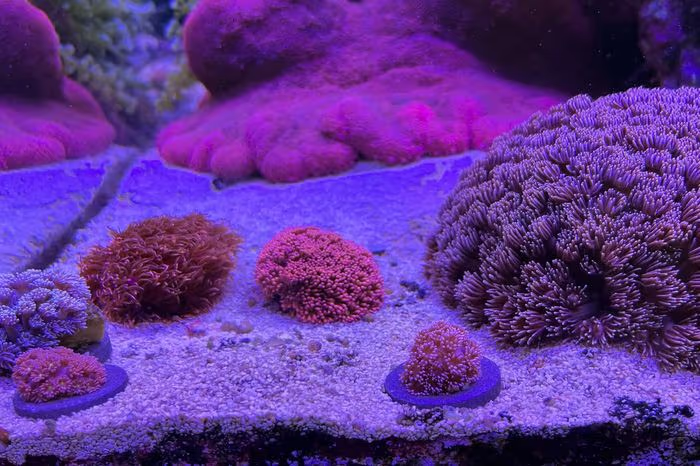
Flowerpot coral at the IMARCS facility

Japan

Rearing flowerpot coral

Flowerpot corals (Goniopora) are among the most heavily traded corals, and most are collected from the wild. CITES trade records show that a single species, Goniopora columna, made up about 7.2 million pieces, 18 percent of the total coral trade, between 2010 and 2020.

We rear Goniopora in Japan for conservation and potential medical research. Healthy colonies grown and propagated in captivity could give the trade an alternative to wild collection.

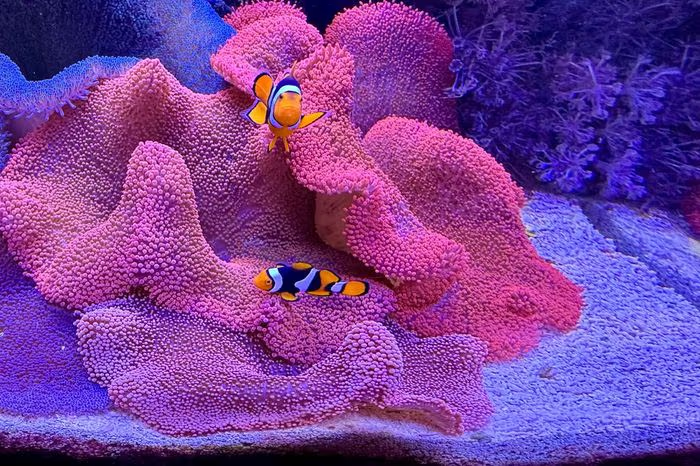
A clownfish pair at the IMARCS facility

Japan

Clownfish breeding

Our breeding pairs anchor school visits and our classroom curriculum, giving students a living example of captive breeding and responsible stewardship.

We also run an ongoing genomic study of our breeding pairs and their offspring, with no fixed endpoint. Every pair we breed takes pressure off wild collection.

From findings to practice

Beyond these core studies, we collaborate with clam farmers in Micronesia and aquaculture institutes in Japan to translate findings into practical restoration and policy tools. Potential applications include:

Symbiont augmentation

Studying whether cross-kingdom symbiont transfer works, and whether heat-tolerant clam zooxanthellae could be mass-cultured for reef nurseries.

Blue carbon

If elevated-pH clam farms prove to be net carbon sinks, certification frameworks could follow. We're also studying the blue carbon potential of mangroves.

Reef reseeding

Growing out giant clams in mariculture tanks to restock reefs where wild populations have declined.

Our approach is multidisciplinary and hands-on: active, evidence-based intervention rather than passive protection. We share results as they mature, and we welcome researchers, practitioners, and partners who want to collaborate.

7giant clam species studied: six Tridacna species and Hippopus hippopus
4 + 5mangrove species and main coral types in our work
60research and stewardship articles on our site, plus 8 guest articles and 3 podcast appearances


Where we work and who we work with

Proud member

World Ocean Council

IMARCS is a nonprofit partner member.

Proud member

Global Fund for Coral Reefs

IMARCS is a member.

Spain: academic and laboratory research partner

University of Barcelona

Researchers from the university advise IMARCS and supervise our genomic work, and the lab processes and analyzes our samples, including the symbiont work on giant clams and corals.

Field research partner

FSM National Aquaculture Center giant clam hatchery, Kosrae, Federated States of Micronesia

Run through Micronesia Management and Marketing Enterprises and led by Martin Selch. Many of our Japan clams came from Kosrae, where we collected samples for our clam-to-coral symbiont experiment.

Livestock partner

Sustainable Aquatics

A marine ornamental hatchery in Tennessee supplying broodstock.

Philippines: planned pilot, not yet under way

Semirara Mining and Power Corporation

Grow-out monitoring of seeded giant clams on Semirara Island.

As published on

Blue FrontierStanford UniversityOregon State University

Japan is home to our mariculture tanks: giant clams, clownfish, carpet anemones, and flowerpot coral. Belize hosts our mangrove work. Our research leadership is based in Canada.

Education and public engagement

A clownfish pair in a carpet anemone at the IMARCS facility

Classroom units, free to download

Two units built for grades 5 to 8: Coral Reefs, Giant Clams, and Responsible Stewardship and Clownfish, Sea Anemones, and Responsible Stewardship. Each comes in a standard edition with a verified NGSS crosswalk and a Christian school edition. Seven high schools and junior colleges have requested them.

imarcs.org/curriculum

Adopt a reef resident

Supporters adopt a giant clam, a clownfish pair, a carpet anemone, or a flowerpot coral living at our facility in Japan, and follow it every month. Plans for adults, families, and classrooms. Adoption money is earmarked specifically for the reef residents and their care.

imarcs.org/adopt

Publishing

Sixty research and stewardship articles on our site, eight guest articles on outside sites including reefs.com, Eco-Business, and six university blogs, and three podcast appearances.

imarcs.org/blog

Leadership and research team

Michael Maddox
Michael Maddox, B.Sc.President and Head of Life Support
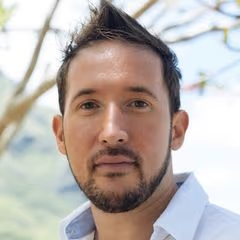
Jordan Flagel
Jordan Flagel, B.A., M.S., M.Sc.Vice President and Lead Researcher
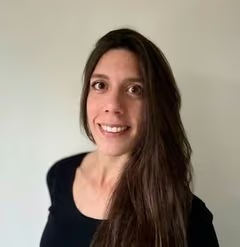
Gui Paphorn
Gui Paphorn, B.A.Treasurer and Head of Indigenous Outreach
Vanessa Arranz
Vanessa Arranz, Ph.D.Research Advisor
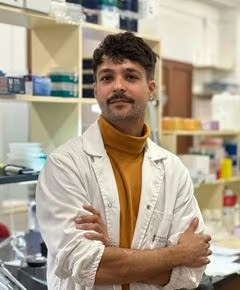
Juan Moles
Juan Moles, Ph.D.Research Advisor

How your support is put to work

Your gift funds our research: the tanks, the field work, the lab analysis, and the people who run them. Give once or monthly, and direct it to a program if you like.

Direct your gift to

  • Where it's needed most
  • Giant clam research
  • Coral bleaching recovery
  • Captive breeding: anemones, coral, and clownfish
  • Mangroves in Belize

Give online

Any amount, one time or monthly, with an email receipt for every gift. Secure payment by Stripe.

imarcs.org/support-us

Larger or multi-year commitments

Talk with our President about larger gifts, multi-year commitments, program support, or visits.

[email protected]

The IMARCS Foundation (International Marine Science and Carbon Sequestration Organization) is a US 501(c)(3) nonprofit, EIN 39-2591649. Donations may be tax deductible.

Every result starts with someone who chose to fund the question.

Your gift keeps the tanks running, the samples moving to the lab, and the field work going. It funds research that could have wide-ranging scientific, ecological, and humanitarian impacts, and it puts real animals, real reefs, and real communities at the center of that work.

The IMARCS Foundation is a US 501(c)(3) nonprofit, EIN 39-2591649. Donations may be tax deductible.